AI Content Creation Agency: How It Works and What It Costs
An AI content creation agency is a studio that designs and runs the machine behind your written content — the briefs, drafts, product pages and campaigns — using language models tuned to your brand rather than a generic tool anyone can buy. We build that kind of system for UK businesses and individuals, then hand it over working.
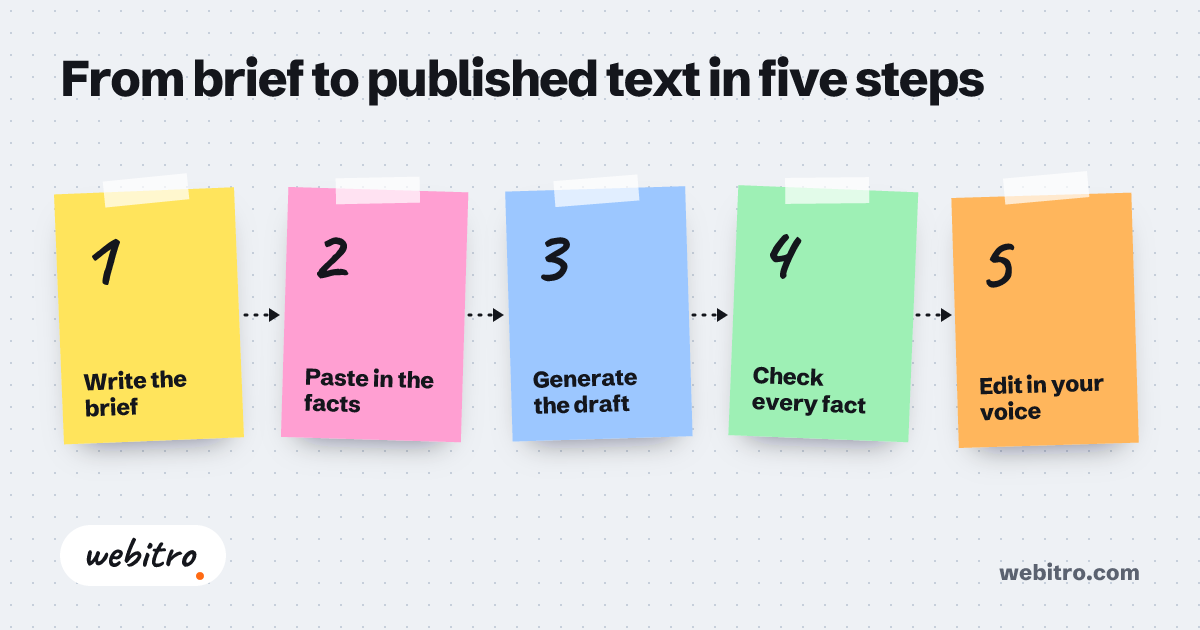
- An AI content creation agency delivers a working content system the client owns, rather than access to a hosted writing tool.
- Cost is set by scope and integrations rather than by a published package price, so two similar-sounding projects can differ sharply.
- Content aimed at AI assistants needs short, self-contained answer sentences that a model can quote without losing the meaning.
- Prompts, templates and configuration should transfer to the client at handover, in writing.
Video summary of this article
Watch this video on its own page
Video transcript
An AI content creation agency builds and runs the system behind your written content, rather than selling access to a writing tool.
An agency designs, builds and maintains the systems that plan, draft, edit and publish your content. It reads what ranks, what converts and what your sales team repeats, then encodes those patterns.
A build moves through discovery, a working prototype on your own material, review, and handover. Handover covers documentation, a training session and a named owner inside your business.
Off-the-shelf software suits simple, high-volume publishing. A custom build matters when content depends on your own data, approvals and tone.
Cost depends on scope, the number of content types, your data connections and review. There is no list price, because two similar projects can differ enormously.
Buyers now ask an assistant a question and never open a result page. Content needs short, self-contained answers, clear headings and quotable facts.
The full details sit in the article.
Our roundup of AI content creation tools shows what each type handles well and where they tend to fall over.
What an AI content creation agency actually does
An AI content creation agency designs, builds and maintains the systems that plan, draft, edit and publish your written content, instead of selling you a licence to somebody else's software.
Most people come to the phrase after trying a generic writing assistant. Those tools do produce text, but they know nothing about your products, your tone or which claims your legal team will accept. An agency turns those rules into something that runs on its own.
The starting point is usually your existing content. We read what ranks, what converts and what your sales team repeats on calls, then encode those patterns into prompts, templates and review steps. What you get back is a repeatable process rather than a folder of one-off drafts.
Because the system lives with you, it keeps earning after handover. Add a new product and the terminology flows through; change a claim and it changes everywhere. That continuity is the difference between commissioning a studio and renting a tool for a year.
How a project runs, from first brief to handover
A build moves through discovery, a working prototype on your own material, review with your team, and a live system handed over with documentation and training.
Discovery is short but direct. We ask what you publish, who signs it off, which channels matter and where the current process snags. Woolly answers here become a tool nobody opens, so this stage carries more weight than it looks.
Then comes one content type, built end to end: a product category, a blog pipeline, a batch of ad variants. You see genuine output on your own material during the first working sessions, and you can bin the direction cheaply if it feels wrong.
After that we widen the scope, agree the guardrails — tone rules, banned phrases, fact-checking steps — and connect the system to the tools your team already opens every day. Handover covers documentation, a training session and a named owner inside your business.
Ready-made tools or a system built around your business
Off-the-shelf software suits simple, high-volume publishing, while a custom build earns its keep when your content depends on your own data, approvals and tone.
If you need a steady stream of generic articles and nobody reads them closely, a subscription is fine — cheap, quick, and the risk sits with you. Our roundup of AI content creation tools shows what each type handles well and where they tend to fall over.
A custom system matters when content is commercial. Product descriptions tied to live stock, regulated claims, quotes that must match a price list, a tone customers recognise. That is where generic output falls apart and where a tailored build starts paying for itself.
We often combine the two. You keep a familiar editing interface, and the writing layer underneath knows your catalogue, your style rules and your approval chain. Our AI content generator is one example of how that layer looks in practice.
What actually decides the cost
The cost depends on scope, how many content types you need, how much of your own data must be connected, and how much review and training your team requires.
There is no list price, because two projects that sound identical can differ enormously. One needs a single pipeline and a light review step. Another needs a catalogue, a claims checker and integration with a publishing system that resists being touched.
Volume plays a part, but complexity plays a bigger one. Connecting to a stock system, a CRM or a translation workflow adds work. So does training a team to trust the output, and so does any hand-holding your approval process demands.
Ask for a scope document rather than a headline figure. Good agencies will show you what sits inside the first phase, what waits for later, and what you could remove to bring the number down without gutting the value.
How long a build takes
Timelines follow scope rather than a fixed package, so a single content pipeline can go live quickly while a multi-channel system with integrations takes longer.
A focused build — one content type, one channel, a light review loop — is genuinely quick. The slow parts are rarely the model. They are access to your systems, sign-off from stakeholders, and the small decisions nobody wants to make until they see output.
Multi-channel work stretches further. Blog, product, email and social each carry their own rules, and a shared voice across all four needs testing. If your team reviews slowly, that becomes the pace of the project, not the development.
We would rather phase a build than promise a date we cannot hold. Splitting delivery into stages also means you can stop after the first pipeline if the results do not justify the next one.
Getting found in AI search, not just Google
AI assistants quote content that is specific, structured and easy to lift, so the writing system has to produce answers, not just articles.
Search behaviour has shifted. Plenty of buyers now ask an assistant a question and never open a result page. That changes what content has to do. It needs short, self-contained answers, clear headings and facts a model can quote without losing the meaning.
We build that requirement into the pipeline from the start, so every draft carries a plain answer sentence, supporting detail and the entities a machine can recognise. Our work on generative engine optimisation explains the mechanics if you want the longer version.
For UK firms selling into crowded categories, this is often the reason a content system gets commissioned at all. Rankings still matter, but being the source an assistant repeats is now the harder prize.
What to ask before you commit
Before you commit, ask who owns the prompts and data, how output is fact-checked, what happens when a model changes, and who supports the system after launch.
Ownership first. The prompts, the training examples and any tuned assets should belong to you at handover, in writing. If an agency keeps the recipe locked inside its own account, you are renting your own content engine.
Then ask about accuracy. Every system that writes about prices, products or regulations needs a checking step, whether that is a human reviewer or a lookup against a source of truth. Models drift, and updates land without warning.
Finally, support. Who fixes it when an API changes, or when your catalogue doubles overnight? A retained arrangement is normal, and it should be described in plain terms before you sign rather than discovered six months later.
Where Webitro fits in
Webitro builds these systems end to end — brief, prototype, live tool — and keeps supporting them once your team is running them daily.
We are a software studio, not a content farm. Everything we deliver arrives working: connected to your tools, documented, and owned by you. If you would rather start small, a single pipeline is a sensible first step and a fair test of the idea.
You can see the wider picture on our services page, or tell us what you publish and we will suggest where to begin. A short call usually settles whether a build makes sense or whether a simpler route will do the job.
Our AI content generator is one example of how that layer looks in practice.
Frequently Asked Questions
How much does an AI content creation agency cost?
It comes down to scope: how many content types you need, how many systems we connect to, and how much review your team wants. We quote after a short discovery call rather than publishing a package price that would mislead most businesses.
Could we not just use a subscription writing tool?
You could, and for low-stakes volume it is often the right call. The gap opens up when accuracy, brand voice and product data matter — that is when a built system saves real hours instead of creating another editing job.
Will the content read as though a machine wrote it?
Not if the rules are built properly. We feed in examples of your own writing, agree phrases to avoid, and keep a human check on anything commercial. Flat output usually points to a thin brief rather than a weak model.
Do we own the system once the project ends?
Yes. Prompts, templates and configuration transfer to you at handover, along with documentation and a walkthrough. If you want us to keep maintaining it, that is a separate arrangement you can end.
What do you need from us to start?
A sample of what you publish now and a rough sense of volume. That is enough for us to say whether a build makes sense, or whether a lighter route will serve you better.