AI Powered Content Automation: How It Works and What It Takes to Build
AI powered content automation is the practice of wiring language models into a scheduled workflow so that research, drafting, editing, publishing, and distribution happen as one connected process instead of a stack of manual chores. It is less about asking a chatbot for a blog post and more about removing the copying, pasting, and chasing that sits between every step.
- Content automation systems usually fail at the review and handoff steps, not at the drafting step.
- A human approval checkpoint is what keeps automated publishing from turning into an unedited feed nobody wants to read.
- The number of connected systems changes a build far more than the monthly content volume does.
Video summary of this article
Watch this video on its own page
Video transcript
Content automation connects language models into one scheduled workflow for research, drafting, editing, publishing, and distribution.
It turns a topic list, keyword set, or product catalog into published content. The hard part is moving work between tools without copying and pasting.
A pipeline moves each topic through intake, research, drafting, human review, publishing, and measurement. Most teams skip measurement, so pull performance back into intake.
It pays off fastest where volume is high and the format repeats. Ecommerce, blog programs, and social distribution are the clearest cases.
A ready-made tool is enough when one person writes for one channel. A custom build earns its keep when content must flow into your own systems.
A review layer checks claims against stored sources and enforces a written brand voice. A person must sign off before publishing. Cost and timeline track how many systems you connect and how many review steps you require.
The full details are in the article.
If you are assembling the pieces yourself, our notes on AI for web scraping cover the messy parts of source collection.
What AI Powered Content Automation Actually Is
AI powered content automation is a connected system, not a single writing tool, that turns a topic list, keyword set, or product catalog into finished, published, and distributed content with minimal manual handling.
Most people picture a chatbot that writes a blog post. That is one small piece of a much longer chain. A real system also pulls topic ideas from search data, gathers source material, checks facts, pushes the finished piece into your CMS, and posts it where your audience already is.
The difference matters more than it looks. The hard part was never the writing. It is moving work between tools without a person copying and pasting all day. Automation owns that handoff, and that is where the hours come back.
We build these systems for teams that publish often enough that manual steps become the bottleneck. Once the chain runs, one editor can supervise output that used to keep three people busy.
What a Working Content Pipeline Looks Like
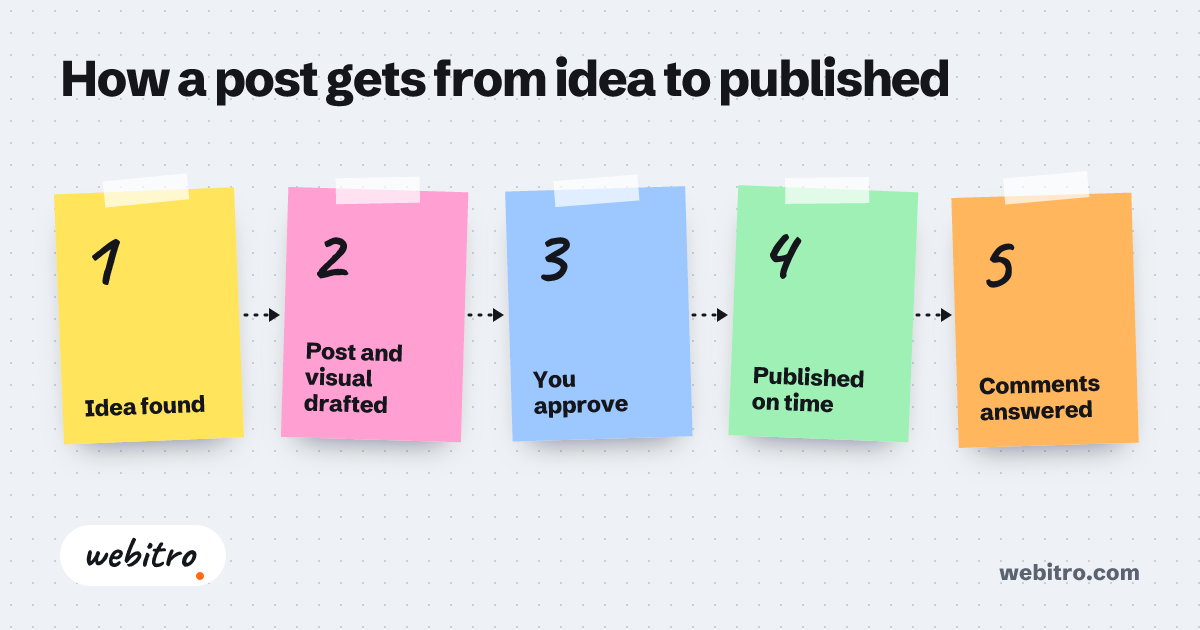
A working pipeline moves each topic through intake, research, drafting, human review, publishing, and measurement, with every stage writing its output into the next one automatically.
A pipeline is just stages with clean inputs and outputs. Intake turns a topic backlog, keyword list, or product catalog into jobs. Research gathers raw material and stores it somewhere the next stage can actually read.
Drafting writes against a brief instead of a blank page. Review is where a person approves, edits, or rejects. Publishing pushes through your CMS, and distribution handles social posts, newsletters, and syndication.
The stage most teams skip is measurement. Pull performance back into intake so the system learns which topics earn traffic and which ones quietly die. That feedback loop is what separates automation from a content mill.
Almost every stage touches other software, which is why the connective tissue matters as much as the models. If you are assembling the pieces yourself, our notes on AI for web scraping cover the messy parts of source collection.
Where It Pays Off First
Content automation pays off fastest where volume is high and the format repeats, which usually means product descriptions, an ongoing blog program, and social distribution.
Ecommerce is the clearest case. A catalog with hundreds of items needs descriptions, titles, and category copy that hold the same tone throughout. Doing that by hand is slow, and the four hundredth description always reads worse than the first.
Blog programs come second. The bottleneck there is rarely writing speed. It is keeping a calendar full and every piece reviewed before it ships. Automation handles scheduling and repetitive structure so writers spend time on the parts that need judgment.
Social distribution is the third. Each finished piece gets reshaped for every platform, and that reshaping is almost entirely mechanical. If that is your main need, social media automation is a narrower starting point than a full content system.
Custom Build or Ready-Made Tool?
A ready-made tool is enough when one person writes for one channel, while a custom build earns its keep when content must flow into your own systems, follow strict review rules, or run across several channels at once.
Start honest about the constraint. If you publish a handful of articles a month and one editor handles the whole thing, a subscription tool will do the job and you should not pay for more.
The math changes once content has to land inside tools you already own. Product data lives in a database, approvals live in a ticketing system, publishing runs through a CMS with custom fields. Off-the-shelf products stop at their own walls.
We compared the common options in our breakdown of AI content creation tools, and the pattern holds: the tool covers drafting, and everything around drafting is still your problem.
If you would rather start from a working module than a blank repository, an AI content generator gives you the writing layer to build on.
If you want a rough sense of budgeting before scoping, our piece on what custom software costs walks through the factors that move the number.
Guardrails: Voice, Facts, and Citations
Automated content stays safe when a review layer checks claims against stored sources, enforces a written brand voice, and blocks publishing until a person signs off.
Language models will write a confident sentence about something that never happened. That is known behavior, not a bug you can prompt away. The fix is a fact-checking step that compares claims against the source material the system collected.
Voice is the second guardrail. Give the model examples of approved copy and a short list of phrases you never use. Without that, every article drifts toward the same flat tone readers have learned to skip.
Citations matter more than they used to. AI assistants now answer questions directly and link to sources they trust, so being quotable has become its own discipline. Our work on generative engine optimization exists because that layer is separate from classic SEO.
When several models and tools have to cooperate on one article, AI orchestration keeps the steps in order and the failures recoverable.
What Drives Cost and Timeline
Cost and timeline track how many systems you connect, how many languages you publish in, how many review steps you require, and how much content the pipeline carries each month.
There is no single price for this work, and anyone quoting one before seeing your stack is guessing. The scope lives in the connections, not the writing.
Ask a few questions. How many tools must the pipeline talk to? One language or five? Does a person approve every piece, or only the ones flagged as risky? Each answer adds or removes work.
Volume matters too, but less than people expect. A system moving a hundred pieces a month is rarely much harder to build than one moving twenty. The design is similar; only the throughput settings change.
How to Start Without Overbuilding
Pick one workflow that already runs, automate it end to end, and expand only after the pipeline has produced content you would publish without apology.
Resist the urge to automate everything at once. Choose your most repetitive path, usually product descriptions or a weekly blog slot, and wire that single path from intake to publish.
Run it for a month with a human checkpoint at the end. Track how long review takes and how often you reject a draft. Those numbers tell you whether the system is ready to carry more.
The glue that schedules everything, from triggers to retries to approvals, usually falls under AI automation, and it is the part teams underestimate when they budget for a build.
If you want a second opinion on scope before committing, talk to our team and we will tell you what is worth automating first.
If that is your main need, social media automation is a narrower starting point than a full content system.
Frequently Asked Questions
Is AI powered content automation the same as using a blog writer tool?
No. A blog writer handles drafting. Automation covers the whole path, including research, review, publishing, and the reporting that feeds your next round of topics.
Will automated content hurt my search rankings?
Not on its own. Thin, unverified pages are what hurt you. Content grounded in real source material, checked by a person, and published on a steady schedule usually outperforms an irregular manual effort.
How long does a build take?
It depends on how many systems we have to connect. A single-channel pipeline comes together quickly. Multi-language setups with custom approval routing take longer, and we scope that before anyone starts.
Do we need an in-house developer to keep it running?
Rarely. We hand over documented pieces and monitoring, so your team can adjust topics, prompts, and schedules without touching the plumbing underneath.
Can it publish into the tools we already use?
Usually, as long as the tool has an API or a documented import format. That is the first thing we check during scoping, because it decides how much of the rest is straightforward.