Custom AI Chatbot Development Cost in the UK: What Drives the Price
A custom AI chatbot is a conversational assistant built around your own content, tone and business rules rather than configured inside a template someone else designed. Its development cost in the UK is never a single fixed number, because it moves with the number of channels you need, how much of your data the bot must reach, and how tightly it has to plug into the systems your team already uses.
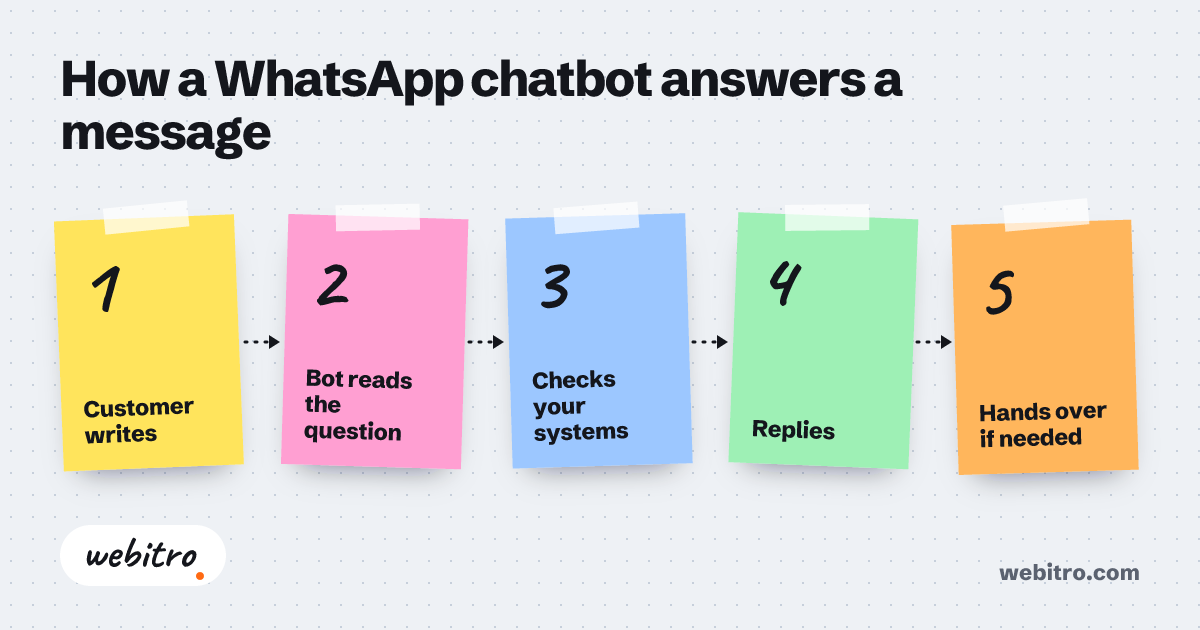
- Most of a custom chatbot budget goes on data preparation and integration work rather than on the conversational front end.
- Each messaging channel carries its own API rules and approval process, so a three-channel build costs more than a single-channel one with an identical knowledge base.
- Ongoing model usage is billed by consumption, so running costs rise with conversation volume rather than with the size of the original build.
Video summary of this article
Watch this video on its own page
Video transcript
Custom artificial intelligence chatbot development cost in the United Kingdom depends on scope, channels, data access and integrations.
Cost is driven by scope, not by a per-bot price list. A useful quote shows discovery, data preparation, build, integration and support as separate lines. Then you can compare like for like.
Data preparation and integration usually absorb the largest share of the budget. Conversation design matters, but it is rarely the largest invoice line.
Each messaging channel has its own rules and approval process. WhatsApp, Telegram and Discord are priced separately, even with a shared knowledge base. Start with one channel, then add a second later.
Running costs are monthly and consumption-based. Model usage is billed by consumption, so conversation volume raises the bill. Caching frequent answers and routing simple questions down cheaper paths keeps that bill honest.
A subscription tool is cheaper at the start. It becomes expensive once you need deep integrations, your own data and full control. Custom development removes the ceiling on what comes next.
The article has more detail on budget control.
Our breakdown of what custom software costs follows the same pattern.
What determines the cost of a custom AI chatbot in the UK?
Cost is driven by scope — conversation complexity, channel count, data access and integrations — not by a per-bot price list.
Ask three UK suppliers to price the identical chatbot brief and you will get three different answers. The gap is rarely greed. One quote bundles content cleanup and testing, another assumes your team hands over tidy data, and a third quietly leaves support out of the number.
A useful quote splits the work into discovery, data preparation, build, integration, testing, handover and support. Once those lines are visible you can compare like for like and see which part has been priced thin. Our breakdown of what custom software costs follows the same pattern.
Two chatbots can look identical in a demo and behave nothing alike in production. The one that answers from your real policies, prices and booking rules takes longer to build, and that effort is where the money goes.
Which parts of a chatbot build take the most budget?
Data preparation and integration work usually absorb the largest share, because a bot is only as good as the content it can reach and the systems it can touch.
Conversation design is the visible work: intents, fallbacks, tone, and the point where a human takes over. It matters, but it is rarely the largest line on the invoice.
Data preparation usually is. Someone has to gather your help pages, PDFs, product records and old support tickets, clean them up, and decide which sources the bot may trust. Contradictory content produces vague answers, and repairing that after launch costs more than doing it properly first.
Integration is the other heavy item. Checking a booking calendar, reading stock, raising a ticket or pushing a lead into your CRM means authentication, error handling and testing against systems that were never designed to be questioned by a machine.
Does the number of messaging channels change the price?
Yes — each channel carries its own API rules, approval process and moderation needs, so WhatsApp, Discord and Telegram work is quoted separately.
Every messaging platform plays by its own rules. WhatsApp requires business verification and template approval, Telegram is quick to get moving, and Discord needs roles and moderation that a support bot never has to think about.
That is why we price channels separately when we build a WhatsApp chatbot AI alongside Discord and Telegram versions for the same client. The shared knowledge base is one job. The delivery layer is three.
The technical differences are set out in our notes on the WhatsApp, Telegram and Discord bot APIs, which are worth reading before you commit to a multi-channel launch.
If your customers already gather in one app, start there. Adding a second channel later is cheaper than launching on three at once and finding out the conversation design was wrong.
What does it cost to run a chatbot after launch?
Running costs are monthly and consumption-based — hosting, model usage, monitoring and content updates continue for as long as the bot is live.
A chatbot is a running service, not a one-off delivery. Hosting, model usage, monitoring and small content fixes continue after handover, and they scale with conversation volume rather than with the size of the original build.
Model usage is billed by consumption, so a bot handling thousands of conversations a month costs more to run than one answering a few hundred. Caching frequent answers and routing simple questions down cheaper paths keeps that bill honest.
Where the bot sits matters too, which is why we talk through whether to run on a local server or in the cloud before the build starts.
Support terms vary. Some clients want a monthly arrangement covering monitoring and updates; others prefer to call us when something needs changing. Neither is wrong, but the choice belongs in the quote rather than in a surprise invoice.
If the bot is one piece of a wider automation, our explanation of how AI workflow automation pricing works shows where the shared costs sit.
Is a subscription chatbot cheaper than custom development?
A subscription tool is cheaper at the start, but it becomes the expensive option once you need deep integrations, your own data and full control of the conversation.
Subscription chatbot builders are decent value when your needs are ordinary: a website widget, a handful of FAQs, a standard handover to email. You pay monthly, you are live in days, and nobody has to maintain anything.
The sums change once the bot must know your pricing rules, act inside your booking system, hold its tone across WhatsApp and Discord, and keep customer data inside your own infrastructure. By then you are paying for configuration work anyway, and you own none of the result.
Custom development also removes the ceiling on what comes next. Adding a capability to something you own is a change request; adding it to a rented platform depends on whether the vendor has built it yet.
It helps to compare the two routes against what AI agent development costs once the bot starts taking actions such as booking, refunding or escalating, rather than only answering questions.
How do you keep a chatbot budget under control?
Fix the scope before you ask for prices — one channel, one job, every system named — then expand only where real conversations justify it.
Choose one channel and one job with a clear measure of success: bookings taken, tickets deflected, leads qualified. Build that first, watch real conversations for a month, then decide what deserves more budget.
Write down every system the bot must touch before you request quotes. Suppliers price unknowns defensively, and a vague brief comes back either padded or riddled with caveats that reappear later as change requests.
Ask who owns the code, the prompts and the data at the end. A fixed build fee means little if you are tied to a host you cannot leave without rebuilding from scratch.
And keep a small budget for the first month after launch. Real users always find phrasing nobody tested, and a quick fix then is far cheaper than a stalled project nobody trusts.
That is why we price channels separately when we build a WhatsApp chatbot AI alongside Discord and Telegram versions for the same client.
Frequently Asked Questions
How long does a custom chatbot take to build?
It depends on how much content has to be cleaned and how many systems the bot must reach. A single-channel bot answering from your own pages is a short project; a multi-channel build wired into bookings and CRM is not, and anyone who promises otherwise has not asked enough questions.
Can I get a fixed price instead of an estimate?
Yes, once the scope is written down. We fix the price for a defined build and price changes separately at an agreed rate, which is fairer for both sides than a padded estimate covering work nobody asked for.
Do we need to train our own AI model?
No. Most projects use hosted models through an API and pay for what they consume. What shapes the quality is the content, rules and examples you give the bot, not model training on your side.
Who owns the chatbot when the project ends?
You should. Ask for the code, the prompts and the data in your own accounts before you sign, and check what leaving would actually involve.
Can the bot pass a conversation to a person?
It should, and that handover is part of the design rather than an afterthought. A clear escalation path also protects you when the bot meets a question it was never built to answer.