Custom Ecommerce Website Development: What It Takes to Build a Store That Fits
Custom ecommerce website development is the practice of building an online store's catalog, checkout, pricing, and back-office logic around your own operation instead of reshaping your operation to fit a template. It costs more up front than a hosted plan, and it earns that premium only when a standard store platform starts fighting your business rules.
- Custom ecommerce development is justified mainly by unusual pricing, catalog, or fulfillment rules, not by the number of pages on a store.
- Integrations with inventory, ERP, and fulfillment systems usually consume more build time than the customer-facing storefront.
- A headless setup lets a business keep proven commerce infrastructure for cart, payment, and tax while replacing the storefront and admin experience.
- Data migration from an existing store is typically the least predictable phase of a custom build.
Video summary of this article
Watch this video on its own page
Video transcript
Custom ecommerce development builds a store's catalog, checkout, pricing, and back office logic around your operation.
Custom development means writing catalog, checkout, and back office logic yourself. The store behaves the way your business works. You also own the tradeoffs.
A custom build is worth it when standard plans force many workarounds. Signs include different wholesale and retail prices, bundles that change shipping and billing, and checkout tied to an older system.
A custom store moves through discovery, architecture, development, integrations, and testing. Discovery maps your catalog, pricing, tax, shipping, and connected systems. Architecture shows what is custom and what is bought.
Cost and timeline depend on external systems, tangled pricing rules, and data migration. Integrations move the number more than page count.
Headless pairs a custom storefront with a proven commerce engine. Fully custom suits pricing, catalog, or fulfillment rules no engine can express.
More details are in the article.
We walk through that whole arc in our post about taking a product from idea to launch.
What Custom Ecommerce Development Actually Means
Custom ecommerce development means writing the catalog, checkout, and back-office logic yourself so the store behaves the way your business already works.
Most stores start on a hosted plan. That's fast and cheap, and there's nothing wrong with it. Trouble shows up later, when pricing depends on customer type, fulfillment splits across two warehouses, or a product configurator fits no widget on the market.
Custom work means owning that logic. You define the product data model, the checkout flow, and the connections to inventory, accounting, and shipping. Nothing gets bolted on with a plugin that breaks after the next platform update.
You also own the tradeoffs. A custom store is software, so it needs monitoring, updates, and someone who understands it. That's the honest price of a store that behaves exactly the way your operation needs it to.
When a Custom Build Beats a Hosted Store Plan
A custom build is worth it when standard plans force so many workarounds that your team spends more time fighting the platform than selling.
Start with one question: can you describe your selling rules in a single sentence? If yes, a hosted plan probably handles it. If the answer needs a whiteboard, custom development starts to make sense.
The usual signs look like this. Wholesale and retail buyers see different prices and minimums. Bundles change what ships and what gets billed. Your checkout has to talk to a system you built years ago. Each workaround adds another plugin, and plugins multiply the ways a store can break at 2 a.m.
There's a middle path. Plenty of businesses keep proven commerce infrastructure for payments and inventory, then build a custom storefront and admin layer on top. You get control where it matters without rebuilding the parts that already work.
How a Custom Store Gets Built, Step by Step
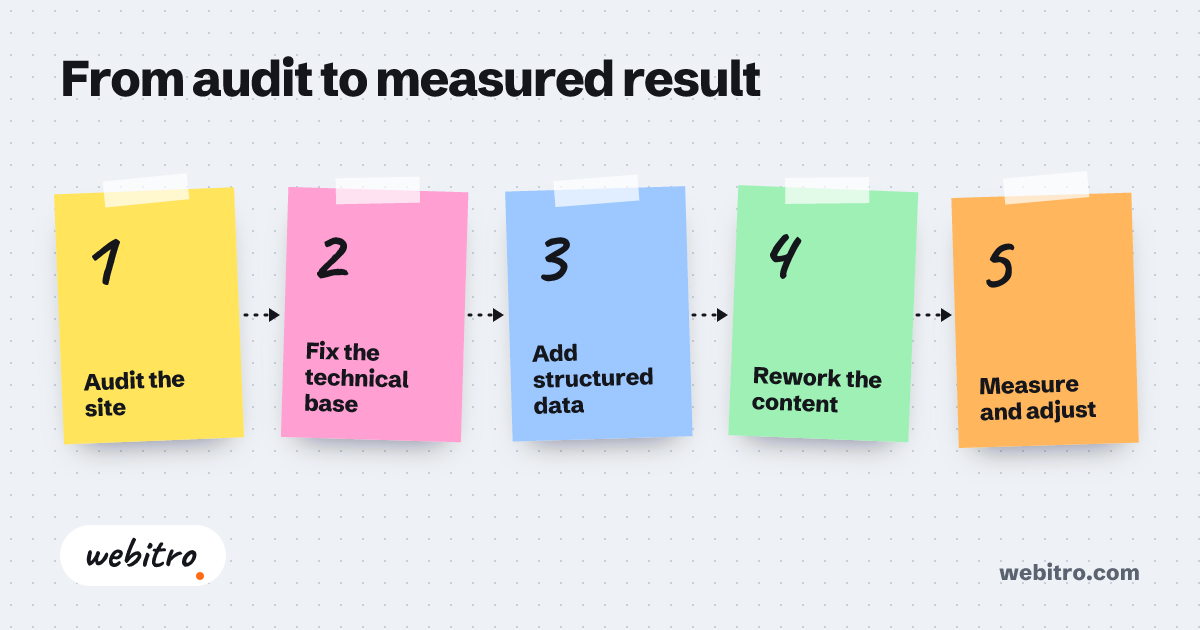
A custom store moves through discovery, architecture, storefront and checkout development, integrations, and real-order testing before launch, and every stage ends with something you can review.
Discovery comes first, and it isn't a formality. We map your catalog structure, pricing rules, tax handling, shipping zones, and every system the store must talk to. Skipping this stage is the most common reason projects stall halfway through.
Then architecture: which pieces are custom, which are bought, and how data flows between them. You should see a diagram and a data model before anyone writes a line of checkout code.
Development splits into a storefront shoppers can actually use and a back office your team has to live in every day. Integrations with inventory, payment, and fulfillment often take longer than the visible store, because their APIs were never designed with your use case in mind.
Testing closes it out, with real orders, real refunds, and real edge cases. We walk through that whole arc in our post about taking a product from idea to launch. Launch day should be boring. If it isn't, something skipped a step.
What Drives the Cost and Timeline
Cost and timeline depend on how many external systems the store must talk to, how tangled your pricing and fulfillment rules are, and how much data has to migrate from your current setup.
Page count barely matters. Integrations move the number. Every payment provider, ERP, warehouse, or subscription system adds discovery, code, and testing — and one badly documented API can cost more than the entire storefront.
Pricing complexity is the second driver. Flat prices are simple. Tiered pricing by customer, region, or volume, with promotions stacked on top, turns checkout into a rules engine. That's real engineering, not configuration.
Data migration is the third. Years of product records, customer history, and order data rarely arrive clean. Budget time for mapping and cleanup, or plan to launch with a trimmed catalog and add the rest in phases.
For a fuller breakdown of how studios price this kind of work, our write-up on what custom software really costs walks through the same variables.
Headless, Hosted, or Fully Custom?
Headless builds pair a custom storefront with a proven commerce engine, while fully custom builds suit businesses whose pricing, catalog, or fulfillment rules no existing engine can express.
Headless commerce keeps a battle-tested back end for cart, payment, and tax, then lets you build the storefront and admin experience you want. For most stores that need a distinctive front end, it's the pragmatic choice.
Fully custom makes sense when your business model is the product. Marketplaces, configurators, rental and subscription hybrids, and B2B portals with contract pricing rarely fit standard plans without constant compromise.
If you're still weighing the two, our comparison of an AI ecommerce website builder versus custom development covers where each approach breaks down. If your rules genuinely don't fit a template, type them out for us and we'll say so.
Speed, Structured Data, and AI Shopping Answers
Page speed, clean product markup, and structured data decide whether shoppers find your store in search results and in AI-generated buying recommendations.
A custom storefront has an advantage here, but only if you use it. Hand-built pages can ship far less JavaScript than a template loaded with apps, and mobile speed still decides whether a shopper stays long enough to buy.
Product schema, readable URLs, and category pages that make sense matter just as much. AI assistants pull product details from structured data, so a store that marks up price, availability, and reviews correctly gets quoted more often than one that doesn't.
Visibility inside AI answers is becoming its own discipline. Our service page on generative engine optimization explains how we handle it for stores.
How to Choose a Development Partner
Choose a partner who shows architecture and data models before writing code, hands over source code and accounts, and can explain exactly how the store will be maintained after launch.
Ask who owns the code. The right answer is you, from day one, with repository access in your name. Be wary of anyone who keeps your store on private infrastructure with no export path.
Ask to see a data model and an integration diagram before you sign. Anyone who can't produce one is guessing. Ask what happens when a payment or shipping API changes, because maintenance is part of the deal, not an upsell.
Finally, talk to the person who will actually build it. You can see how we scope store projects on our ecommerce website development service page, and our services overview shows the rest of what we take on.
Our service page on generative engine optimization explains how we handle it for stores.
Frequently Asked Questions
How long does a custom ecommerce website take to build?
It depends almost entirely on integrations. A store with a custom front end and two connections moves quickly; one that has to sync with an ERP, a warehouse, and a subscription engine takes considerably longer. We give you a staged plan after discovery, not a guess up front.
Can I move to a custom store from Shopify or WooCommerce?
Yes, and it's common. You keep your product data, customer records, and order history, then rebuild the parts that were limiting you. The migration itself is usually the messiest part of the project, so we plan it early.
Do I still need to pay for maintenance after launch?
You do, and it's better to plan for it than to be surprised. Payment APIs change, security patches land, and your own pricing rules evolve. A small monthly budget keeps the store healthy instead of waiting for a holiday outage.
Is custom development worth it for a small store?
Usually not. If you sell a straightforward catalog at flat prices, a hosted plan will serve you well for a long time. Custom pays off when your rules are unusual enough that workarounds are costing you sales or staff hours.
Who owns the code once the project is finished?
You should, without negotiation. That means repository access in your name, your own hosting accounts, and documentation of the integrations. Any studio that resists this is telling you something important.