Generative Engine Optimization (GEO): Getting Cited by AI Answers
Generative engine optimization (GEO) is the work of shaping your pages so AI answer engines like ChatGPT, Perplexity, and Google AI Overviews quote you instead of a competitor. It sits beside SEO rather than above it — same foundation, different reader. When buyers start their research by typing a question into a chatbot, GEO decides whether your name lands in the reply.
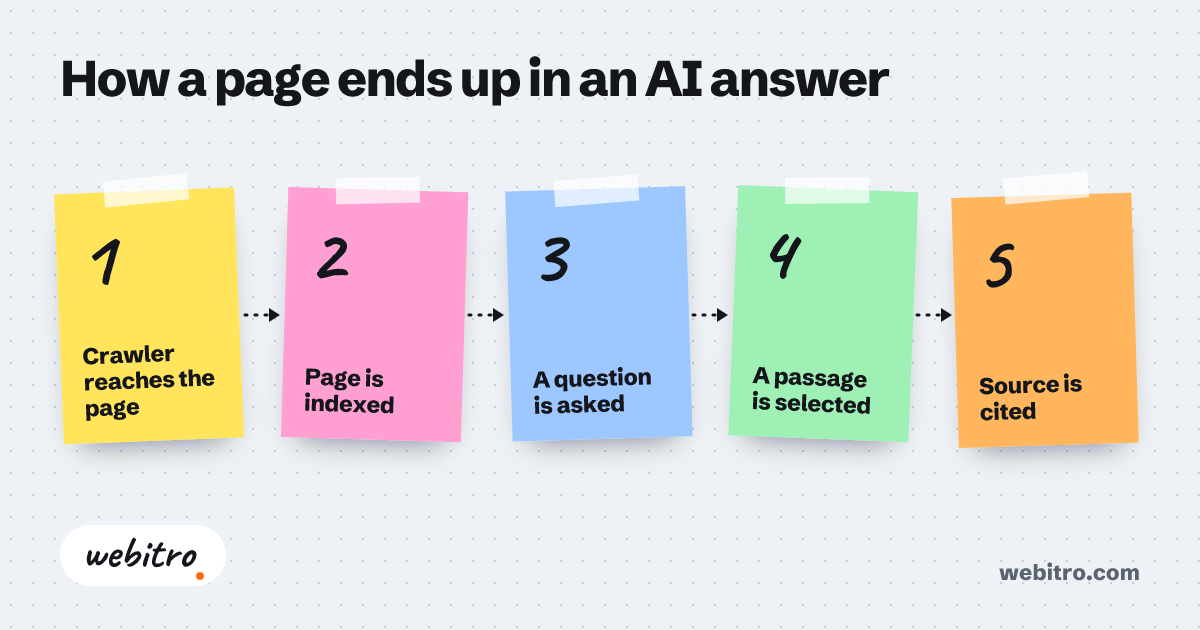
- AI answer engines cite individual passages rather than whole pages, so one well-built section can earn a citation even when the rest of the article is never read.
- Blocking AI crawlers such as GPTBot or PerplexityBot in robots.txt removes your content from the pool those engines draw answers from.
- Using one consistent business name across your site, schema markup, and third-party profiles makes it easier for models to attribute a claim to your brand.
Video summary of this article
Watch this video on its own page
Video transcript
Generative engine optimization shapes your pages so answer engines quote you inside generated replies.
Generative engine optimization makes pages readable, quotable, and verifiable enough for answer engines to cite directly. It shares foundations with search engine optimization but serves a different reader. Answer engines cite passages, not whole pages.
Engines break a question into subquestions, fetch matching passages, and write one reply with citations. Specificity, verifiable facts, and standalone passages win citations. Corroboration across your site and third-party mentions builds trust.
Search engine optimization competes for position in a list of links. Generative engine optimization competes for a mention inside a synthesized answer. Both need crawlability, speed, and clarity, but they reward different content choices.
Start each section with one sentence that answers the heading. Phrase headings as questions, keep paragraphs short, and add tables for comparisons. Cut warm-up text and name your sources with links.
Answer engines can only cite what they can read, so server-rendered pages and schema markup matter. Blocking answer engine crawlers removes your content from the pool. Track citations, mentions, referrals, and a baseline before edits.
Details live in the full article.
If the plumbing still feels abstract, read generative engine optimization explained, which walks through retrieval and citation step by step.
What generative engine optimization actually means
Generative engine optimization is the practice of making pages readable, quotable, and verifiable enough for AI answer engines to cite them directly inside generated responses.
AI answer engines don't hand back a page of blue links. They read a question, pull passages from a small set of sources, and write one reply. Getting into that set is the whole job.
That shifts what ranking means. A model does not need to like your homepage. It needs a clean, self-contained chunk of text that handles the visitor's question better than anything else it retrieved.
Day to day the work is unglamorous: answer questions directly, label those answers, keep facts identical everywhere, and let crawlers reach the page. Small moves, compounding effect.
GEO is not a replacement for search engine optimization. It is the same foundation pointed at a different reader — one that summarizes instead of listing, and that decides what gets repeated to your future customers.
How AI answer engines decide which sources to cite
Answer engines match a question to short, fact-dense passages, then favor the ones that are clear, corroborated across sources, and easy for a machine to verify.
Most engines run a version of retrieval-augmented generation. A query gets broken into sub-questions, the system fetches matching passages, and a model writes a response with citations attached to whatever it leaned on.
What wins a citation? Specificity, verifiable facts, and a passage that stands alone without its surrounding page. Vague marketing paragraphs rarely survive that filter, no matter how many keywords they hold.
Corroboration matters too. When your About page, your profiles, and third-party mentions describe your business the same way, the model has more reason to trust the claim and name you as the source.
If the plumbing still feels abstract, read generative engine optimization explained, which walks through retrieval and citation step by step.
GEO vs SEO: what actually changes
SEO competes for position in a list of links while GEO competes for a mention inside a synthesized answer, so the two share technical foundations but reward different content choices.
SEO fights for position in a list. GEO fights for a mention inside an answer that may only display a handful of sources. Both care about crawlability, speed, and clarity — the payoff differs.
Classic search rewards pages that cover intent across a whole document. Answer engines reward short, extractable units. One long page can serve both, but only if the sections are built to be lifted out.
Link building still helps. Mentions across the web feed the signals models use to judge which sources are worth trusting, and a brand that shows up in many credible places is easier to cite.
The upside is that most GEO work also improves classic rankings. Clear headings, direct answers, fast pages, and consistent facts are things search engines have rewarded for years.
The content structure that gets quoted
Content gets quoted when each section opens with a one-sentence answer, backs it with specifics, and stays short enough to survive extraction intact.
Start every section with one sentence that answers the heading. If a machine extracts only that line, the reader still gets the answer. Everything after it exists to prove the claim.
Phrase headings as questions, because that is how people type into chatbots. Keep paragraphs short. Add a table when you compare options — structured data extracts cleanly and models parse it well.
Cut the warm-up. Introductions that spend several paragraphs setting the scene give a retrieval system nothing to quote. Say the thing, then support it with a fact, a name, or a date.
Name your sources, too. Quoting a study or a public dataset with a link gives the engine something to verify, and verified claims travel further than confident ones.
Technical signals AI crawlers look for
Machine-readable structure — clean server-rendered HTML, schema markup, consistent entity names, and open crawler access — is what lets an answer engine confirm who said what.
An answer engine can only cite what it can read. Server-rendered HTML beats content hidden behind client-side scripts, and a page that loads slowly may be crawled less often.
Schema markup helps the machine confirm who said what. Organization, FAQPage, Article, and Product markup supply context that plain text forces a model to guess at.
Check robots.txt before anything else. If GPTBot, PerplexityBot, or Google-Extended are blocked, you have removed yourself from the pool. An llms.txt file and a clean sitemap make the rest easier.
Keep one canonical name for your business and use it everywhere. Models resolve identity by matching strings across sources, so a casual variant on one page splits the signal.
Before you commit to tooling, it is worth seeing how the main options compare in best AI for SEO content.
How to measure GEO without a rank column
Because generated answers carry no rank column, GEO is measured through citation frequency, brand mentions inside responses, AI referral traffic, and the questions you start appearing in.
There is no rank column for AI answers. Instead, track how often your brand shows up inside generated responses for the questions that matter to your business, and note which competitors appear beside you.
Watch referrals from AI assistants in your analytics, look for new brand searches in Search Console, and keep a simple log of the prompts you test each month. Patterns show up faster than single data points suggest.
Manual prompt testing gets thin once you track more than a handful of questions. Teams publishing at scale usually script the checks so they can see movement week over week instead of guessing.
Set a baseline before you change anything. Note the prompts where you already appear, then re-run the same set after your edits so you can tell improvement from noise.
When to have a GEO pipeline built for you
Once you publish hundreds of pages across several languages, a purpose-built GEO pipeline beats manual tweaking because it audits, rewrites, and monitors at a pace people cannot match.
Manual GEO work runs out of road once you have hundreds of URLs across several languages. Auditing each page by hand, rewriting it, and checking citations every month is a full-time job nobody wants.
A purpose-built pipeline can crawl your site, flag pages that answer nothing, rewrite sections in an answer-first format, and watch how often each page gets cited. Our generative engine optimization service covers exactly that.
It pairs naturally with content production. A custom AI content generator can draft the question-led blocks your editors then sharpen, which keeps the publishing schedule from stalling.
If budget is the first question on your list, our breakdown of what custom software costs explains which variables move the number.
You do not have to start with everything. Pick the pages that already bring in traffic, make them answer-first, and watch what the assistants do with them.
Our generative engine optimization service covers exactly that.
Frequently Asked Questions
Is generative engine optimization just SEO with a new name?
No. Both depend on crawlable, well-structured pages, but GEO targets the passages an AI answer quotes while SEO targets where a link lands on a results page. The overlap is big; the objective is not the same.
Do I still need GEO if I already rank on page one?
Yes, and the ranking gives you a head start. Answer engines lean on sources they can verify, and a page that already earns links and traffic is easier to trust. What you add is structure: short answers, clean facts, and markup.
How long before my pages start getting quoted?
It depends on how often the engine recrawls your site and how crowded the question is. Niche queries move faster than broad ones, and progress tends to arrive in steps rather than a straight line.
Will AI write the content, or do people still matter?
Both. A model can draft the first answer-first version and handle the repetitive parts, but someone who knows your customers has to check the claims and add the detail no generator can invent.