AI Contract Review Software Development Cost in the UK: What Actually Drives the Price
AI contract review software is a tool that reads incoming agreements, tests each clause against your own rules and returns a marked-up summary for a person to approve. Commissioning one is a software project rather than a subscription, so what you pay in the UK depends on your contract mix, the depth of your playbook and how much freedom the system is given. Here is what genuinely moves that number, and what usually does not.
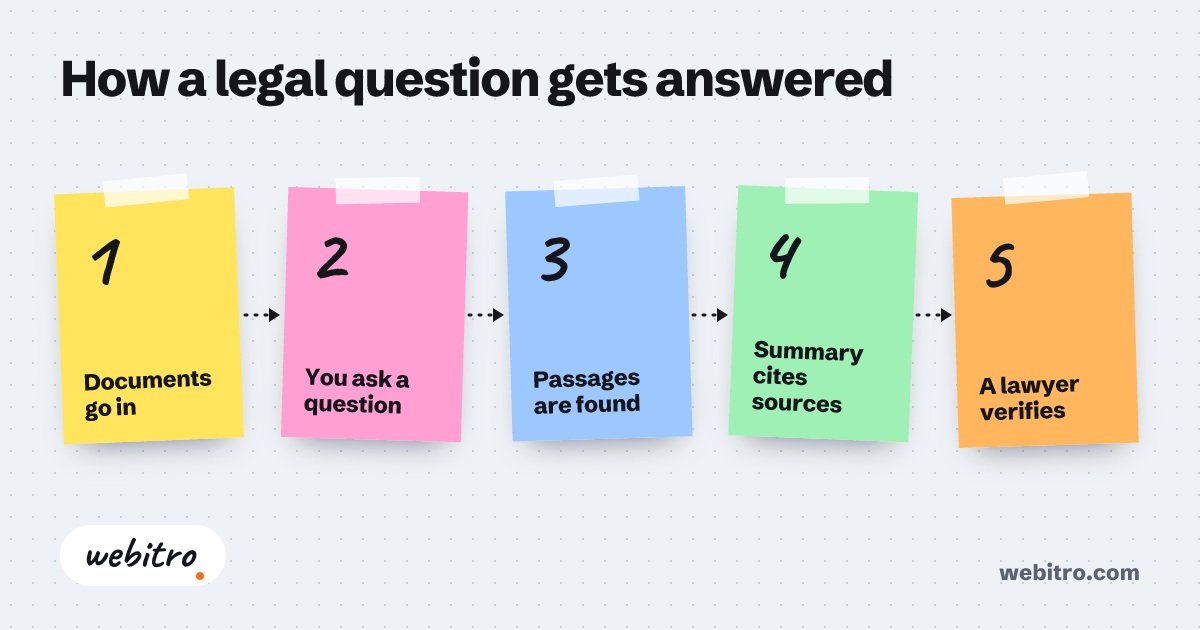
- Most of the budget in a contract review build goes on document parsing, playbook encoding and exception handling rather than on the language model itself.
- A prototype tested against a sample of your own contracts predicts final cost far better than any feature list or demo.
- Two UK firms reviewing identical contract types can receive quotes that differ several times over, because playbook depth and approval routing change the work more than page count does.
Video summary of this article
Watch this video on its own page
Video transcript
This article explains what drives the cost of artificial intelligence contract review software in the United Kingdom.
You pay for a system that reads contracts, tests clauses and returns a summary. The work splits into four parts: extraction, structure, rules and a clear decision.
Cost tracks document variety, playbook depth, integrations and human sign-off. Playbook depth is often the largest single line in a quote. Autonomy costs more than assistance and is your choice.
Bought tools are cheaper for standard contracts and modest volume. Custom builds pay when your playbook and approval route are unique. A middle route uses both for different risk levels.
Contract text is sensitive, so storage and retention rules must be settled early. Most buyers want a named processor and a documented retention window. Logging matters, because overrides need a record and security reviews take time.
A quote starts with discovery on real documents. A fixed-price prototype uses one type, one playbook and one reviewer. Build stages have acceptance tests, and ongoing cost is mostly people.
The full details are in the article.
Our breakdown of custom software cost explains why these variables matter more than feature count.
What you are really paying for when you commission contract review software
You are paying for a system that reads a contract, tests each clause against your playbook and returns a structured summary a lawyer can sign off, not for a chatbot bolted onto a PDF.
Strip away the demos and the work splits into four parts: getting text out of the document, understanding its structure, applying your rules, and presenting a decision someone can act on. Each part fails in its own way, so each one has to be tested against real files.
Extraction sounds trivial until you meet scanned PDFs, tracked changes, schedules and annexes that reset clause numbering halfway down. Files exported from Word often lose their formatting entirely. A build that handles only clean digital text looks impressive in a demo and falls apart in a Tuesday afternoon inbox.
The rule layer is where your commercial judgement lives. A liability cap, a payment term and a termination notice period mean different things to different businesses. The software has to encode your position rather than a generic one, and that encoding is paid work.
Then there is the output. A risk score on its own is useless. A reviewer needs the clause, the risk, the reason and a suggested fallback, in a format that fits the queue they already use. You can commission AI contract review software from us and the scope will follow exactly this shape.
What actually drives the cost of an AI contract review build
Cost tracks document variety, playbook depth, integration count and how much human sign-off the workflow keeps, so two projects handling the same page count can differ by a wide margin.
Document variety is the first multiplier. One contract type from one counterparty is a different job from a mix of NDAs, framework agreements, supplier terms and leases arriving as PDF, DOCX and email attachments. Every variation adds parsing work, test cases and fallback logic.
Playbook depth is the second. Flagging clauses that look unusual is cheap. Encoding your preferred position, your approved fallbacks and the escalation threshold for each one takes real time, and that time is usually the largest single line in any quote.
Integrations come next. Pushing results into a document management system, a CRM or a shared inbox sounds minor and rarely is. Authentication, permissions and error handling all have to be built and proven against live systems rather than a sandbox.
Finally there is the review loop. Some firms want the system to summarise and stop. Others want suggested redlines, an approval chain and a full audit trail. Autonomy costs more than assistance, and that choice belongs to you rather than to the model vendor. Our breakdown of custom software cost explains why these variables matter more than feature count.
Custom build or off-the-shelf: which is cheaper in practice
Off-the-shelf tools are cheaper when your contracts are standard and your volume is modest, while a custom build earns its cost when your playbook and approval route are what makes you different.
There is no shame in buying. If you review a steady trickle of supplier terms and your positions sit close to the market norm, a subscription will beat a build on total cost for the first couple of years, and possibly longer.
The calculation changes when the workflow itself is the product. A lender with its own covenant structure, a recruiter with unusual fee arrangements or a manufacturer with a long tail of customer-specific schedules all hold knowledge that no general tool has. That is when custom pays back.
A middle route is common. Use a bought tool for the bulk of low-value work and commission a narrower build for the contract types carrying the most exposure. Licence spend stays low and the engineering lands where a mistake would actually hurt.
For teams still working out whether legal AI fits at all, legal AI for startups covers the early decisions that come before any code is written.
Data handling, hosting and the UK expectations that shape the bill
UK clients expect contract text to be processed under UK GDPR with clear retention rules and a named processor, and meeting that expectation adds hosting, logging and access-control work to the bill.
Contract text is commercially sensitive by default. Before a single clause rule is written, you need to settle where documents are stored, how long they stay, who can read them and what happens when someone leaves the firm. Those are design decisions with a cost attached.
Most UK buyers want a processor named in the contract, a documented retention window and a workable way to delete data on request. Some also ask for UK or EU hosting. Regional hosting is achievable, but it moves the infrastructure line and sometimes the model choice as well.
Logging matters as much as storage. If the system flags a clause and a lawyer overrides it, you want a record of both. That audit trail is often the difference between a tool a compliance team tolerates and one it blocks outright.
Budget for a security review, however small. Penetration testing, a data protection impact assessment and a written data flow diagram are ordinary requests in regulated sectors, and they consume calendar time as well as money.
How a realistic quote is put together, stage by stage
A workable quote follows a short discovery, a fixed-price prototype tested on your own contracts, then a per-stage build plan, so you see cost per milestone instead of one opaque figure.
Start with discovery. A week of looking at real documents, counting types and mapping current review steps tells both sides whether the project is worth doing at all. Skipping this is the most common reason budgets drift later.
Next comes a prototype. One contract type, one playbook, one reviewer. It is priced as a fixed piece of work and it settles the arguments about accuracy and output format while the spend is still small.
The build then runs in stages: extraction hardening, rule expansion, integration, then reporting and audit. Each stage has an acceptance test written before the work begins, which keeps scope honest and lets you pause without losing what already exists.
Ongoing cost is mostly people rather than servers. Rules need updating when your commercial position shifts, and new contract types need onboarding. Ask what that maintenance looks like before signing, not after go-live. Our from idea to launch walkthrough follows the same sequence.
You can commission AI contract review software from us and the scope will follow exactly this shape.
Frequently Asked Questions
How long does an AI contract review build usually take?
A single contract type with a settled playbook moves fastest; every extra document family and every integration adds another stretch of work. We give a stage-by-stage schedule after discovery rather than one tidy launch date that nobody believes.
Do we need a lawyer involved in the build?
Yes, for the playbook. Developers can encode rules, but only your legal team can decide what an acceptable fallback looks like or when a clause should be escalated. Skipping that input produces a tool nobody trusts.
What happens to our contracts during development?
They are used as test data under a written agreement, kept in a controlled environment with named access, and removed at the end of the project unless you ask for a sample set to stay for ongoing testing.
Can we start small and add contract types later?
That is the sensible route. Build the highest-volume or highest-risk type first, prove it in daily use, then extend. Each addition reuses the extraction and rules framework, so the second type costs less than the first.