What a Custom WhatsApp AI Chatbot Costs a US Small Business
A custom WhatsApp AI chatbot is a bot built on the official WhatsApp Business Platform that reads a customer's message, understands intent, and answers, books, or routes it using your own systems instead of a fixed menu. What it costs depends far less on WhatsApp itself than on how many of your systems the bot has to touch and who keeps it running afterward.
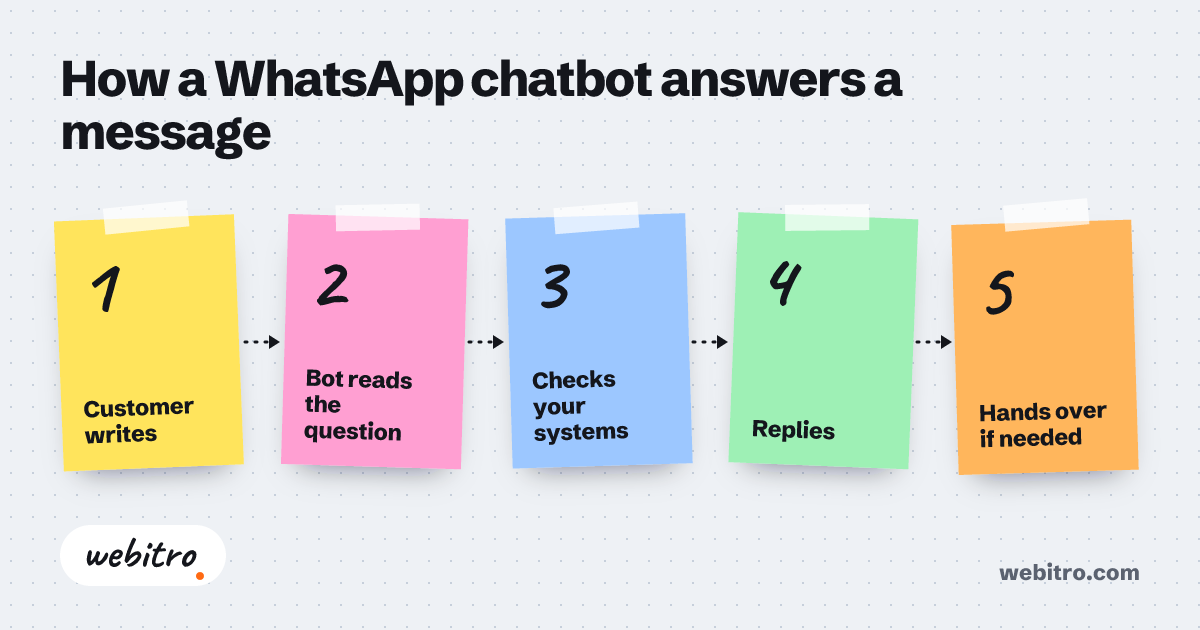
- Most of a WhatsApp chatbot's price comes from integrations and testing, not from the messaging channel itself.
- Meta bills businesses for conversations they initiate on the WhatsApp Business Platform, which is a separate cost from development.
- Bots built on personal WhatsApp accounts risk being banned, so automated messaging at scale requires the official Business Platform.
- A phased launch with one or two flows typically ships in weeks, while payment and CRM integration pushes the schedule out.
Video summary of this article
Watch this video on its own page
Video transcript
The article explains what drives the cost of a custom WhatsApp artificial intelligence chatbot for a small United States business.
The price is set by conversation complexity, integrations, and long-term ownership, not by the WhatsApp channel. Connecting the number is quick, but real work starts with customer questions.
Quotes follow risk and integration depth rather than company size. A bot that handles payments needs more review, testing, and error handling. Existing systems can raise or lower the estimate.
Ready-made builders are cheaper and faster for simple question flows. Custom development costs more upfront but lets you own the code and roadmap. A focused flow on the official platform fits most small businesses.
You pay monthly for Meta conversation charges, model usage, hosting, and answer upkeep. Business-initiated conversations are priced separately from replies to people who wrote first. Hosting, monitoring, and updating answers require a small retainer.
List the ten questions customers actually send before anyone writes code. Launch with order status, hours, and a clean handoff to a person. Ask who owns the code, the conversation data, and each monthly fee.
The full details are in the article.
Our breakdown of custom software cost follows the same logic: scope and integrations decide the number, not lines of code.
What actually drives the price of a custom WhatsApp chatbot?
The price is set by conversation complexity, integrations, and long-term ownership, not by the WhatsApp channel, which costs nothing to connect.
A WhatsApp chatbot is cheap to imagine and expensive to get right. Connecting the number takes an afternoon. The real work starts when a customer types "hi" at 11 p.m. and expects a straight answer about a return, a booking, or a price.
Discovery sets the floor. If your bot answers five fixed questions, the scope stays small. If it has to read order history, check a booking calendar, and hand off to a human in the right tone, every one of those connections is engineering time.
Language is another line item. A bot serving customers in English and Spanish needs tested prompts, not a translated menu. Add regional phrasing and the testing pass grows again.
Ownership matters most over time. A bot you can edit yourself costs more up front than one locked into a vendor's dashboard, and noticeably less every month after that.
Why do two similar small businesses get very different quotes?
Quotes follow risk and integration depth rather than company size, so a shop taking payments through the bot pays more than one that only answers questions.
Two businesses with the same headcount can land far apart. A bot that handles payments carries more review, testing, and error handling than one that only replies to questions, and that difference shows up in the estimate.
Existing systems pull the number up or down. A current CRM with a clean API is a short job. A fifteen-year-old spreadsheet and a phone-only order process means someone has to build the bridge before the bot can say anything useful.
Volume changes the design too. A bot handling a few hundred chats a month runs on modest infrastructure. One handling thousands needs caching, logging, and a plan for the afternoon your AI provider has an outage. Our breakdown of custom software cost follows the same logic: scope and integrations decide the number, not lines of code.
Are off-the-shelf chatbot builders cheaper than a custom build?
Ready-made builders are cheaper and faster for simple FAQ flows, while custom development costs more upfront but stops charging you for changes to your own roadmap.
Off-the-shelf chatbot builders look good in a demo. They're quick, predictable, and for a plain FAQ flow they're often the right call. The limit appears when your bot needs to touch inventory, invoices, or a scheduling tool that wasn't on the vendor's roadmap.
Custom development flips that trade-off. You pay for discovery, build, and testing once, then own the code. New behavior comes from your priorities instead of someone else's feature request queue.
A middle path fits most small businesses: a focused flow on the official WhatsApp Business Platform, wired to the two or three systems that actually matter. That's where our WhatsApp chatbot AI projects usually begin — one conversation, real data, tested against real customer questions.
What running costs show up after the build invoice?
You pay monthly for Meta conversation charges, AI model usage, hosting, and answer upkeep, and those fees scale with how many customers the bot talks to.
The build is one invoice. Keeping the bot alive is another, and it arrives every month.
Meta charges for business-initiated conversations on the WhatsApp Business Platform, so a campaign that messages ten thousand past customers is priced differently from replies to people who wrote first. Budget that separately from development, and separate again from your AI spend.
Model usage is metered too. Every message the AI processes costs a small amount, and long threads with attached documents cost more. Caching the twenty answers you give most often trims that line without hurting quality.
Then hosting, monitoring, and a human to update answers when your hours or prices change. A small retainer covers it. Skipping it is how bots go stale and start quoting last season's menu to a customer standing in your store.
How do you scope a bot so the estimate holds?
Write down the ten questions customers actually ask, launch one flow first, and add integrations only after real conversations show where the pressure is.
Most estimates drift because discovery got skipped. Before anyone writes code, list the ten questions your customers actually send, then decide what the bot must refuse to answer. Refusals are a feature, not a gap.
Phase the work. Launch with order status, hours, and a clean handoff to a person. Add payments, a second language, and CRM sync once you can see which conversations keep slipping through. Taking a bot from idea to launch is mostly a sequencing problem, and sequencing is what protects the budget.
Timelines follow the same shape. A tight first version typically goes live in weeks rather than months, but only when your product data and policy answers are ready on day one. Missing content stalls a build faster than missing code.
What should you ask before approving a proposal?
Ask what happens when the AI is unsure, who owns the code and conversation data, and how the monthly fee splits between platform, AI, hosting, and support.
Ask what happens when the bot doesn't know. A strong answer describes a fallback: hand to a human, log the gap, review it weekly. A weak answer is "it always knows."
Ask who owns the code and the conversation history. Get it in writing. Moving to another studio later is far cheaper when you hold the repository and can export your own data.
Ask for the monthly number broken into Meta fees, AI usage, hosting, and support. A single bundled figure hides which part grows as you add customers, and that's the part you'll argue about in month four.
Then ask for a small paid pilot: one flow, one channel, real customers for a month. It costs less than a full build and tells you more than any proposal. Call us at +90-551-980-16-46 and we'll scope that pilot with you.
That's where our WhatsApp chatbot AI projects usually begin — one conversation, real data, tested against real customer questions.
Frequently Asked Questions
How much does a custom WhatsApp AI chatbot cost for a small US business?
There's no honest single number, because the quote depends on how many systems the bot touches and who maintains it. Any studio that names a price before a discovery call is guessing. Ask for a fixed-scope first phase and a separate monthly estimate.
Is a chatbot cheaper than adding a support hire?
Usually for repetitive questions, not for everything. A bot handles hours, order status, and booking changes around the clock. Angry customers and edge cases still need a person, so plan for both.
How long until the bot is live?
A focused first version with one or two flows typically runs a few weeks once your content and system access are ready. Payment handling and CRM sync add time, so most teams launch in phases.
Do I need the official WhatsApp Business Platform?
Yes, for automated messaging at any real scale. Bots running on personal WhatsApp accounts get banned, and you lose the number. The Business Platform is the supported route and it's also where Meta's conversation fees come from.
Can the bot take orders and payments?
It can, and that's usually the most expensive part. Order handling means connecting your catalog or booking system, and payments add security review plus a payment provider integration on top.